Chinese New Year: Southeast Asia's Key Celebration
The New Year is the biggest holiday for the Chinese. Families gather, the country turns red, and streets come alive.
 J
J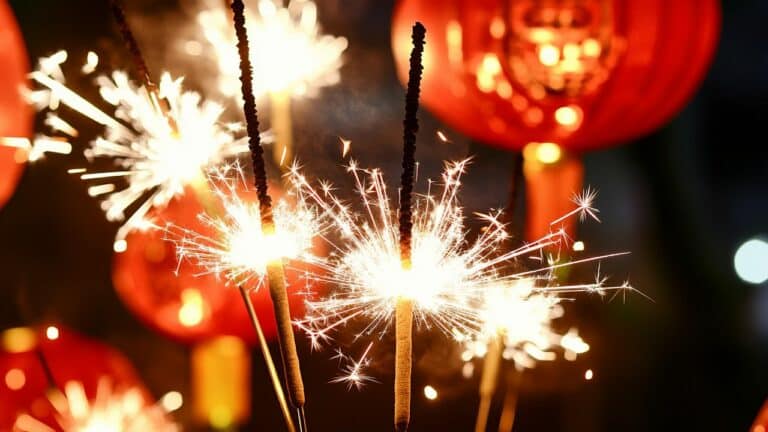
For Europeans, Christmas is the highlight of the year, but for the Chinese, it's the New Year celebration that holds the most significance. This event is steeped in customs and traditions. Families gather at the home of the oldest family member. During this time, millions travel across China and in countries with significant Chinese communities to celebrate a fresh start with family and in the streets. Curious about when the Chinese New Year is celebrated and its customs? Read on.
>>> Considering celebrating New Year's Eve? Zakopane in Poland offers unique charm with attractions for tourists in the Tatra region.
When Does the New Year Begin in China and Neighboring Countries?
While our New Year falls on January 1st, the Chinese follow the lunar calendar, meaning their New Year date varies. It starts on the first day of the first lunar month after the winter solstice, between January 21 and February 20.
The Chinese calendar, over 5,000 years old, aligns the New Year with spring festivals and nature's awakening. It features animal and element cycles to mark years. 12 animals (rat, ox, tiger, rabbit, dragon, snake, horse, goat, monkey, rooster, dog, and pig) pair with five elements: wood, fire, earth, metal, and water. Each year combines an animal and an element, with each element linked to two consecutive years, one yin and the next yang.
This year marks the wooden dragon.
The Mythological Origins of New Year Customs: How Nian Was Driven Away
Nian, a mountain-dwelling monster, awoke annually at year's end to terrorize villages. People feared for their lives and property until a wise man advised them to use red decorations, fireworks, and loud noises to scare it away. These rituals are now annual traditions to ward off Nian and misfortune.
Home Cleaning and Decoration
Like our Christmas trees and lights, the Chinese use red and gold decorations, red envelopes, and wishes. They buy these or visit markets for calligraphers to write special gold-ink wishes. These adorn homes or are given as gifts.
Before the festivities, homes are cleaned to remove dirt and bad energies from the past year, making way for new energy. Decorations then invite happiness and abundance, with red symbolizing protection and good fortune.
Red posters with golden paired inscriptions expressing blessings and prosperity are placed on doors. These often depict the god of wealth or the year's animal. Statues of these animals, along with mandarins and oranges (symbols of happiness and abundance), or peonies, orchids, or plum branches (symbols of growth and life), are arranged throughout the home.

Mass Migration
Traditionally, families reunite for Chinese New Year, prompting massive travel. Gatherings occur at the home of the oldest family member. The Chinese enjoy up to seven days off, leading to sold-out trains, buses, and planes, and crowded hotels. Prices can triple, and dining costs rise. Experiencing this major holiday in China requires advance planning and a generous budget.
Chinese New Year celebrations also occur in Southeast Asia, the Pacific, England, the USA, and Canada, wherever significant Chinese communities exist.
Traditional Dinner
Families first gather for a meal, either at home or increasingly in restaurants. The table features at least 18 dishes, including cold and hot appetizers, soups, noodles, rice, and fish. Dumplings symbolize family unity and happiness, long noodles represent longevity, and sticky rice cakes promise prosperity. Fish is served but not fully eaten, symbolizing abundance and surplus for the new year.
Throughout the evening, gifts are exchanged, with red envelopes containing money, or HongBao, being the most popular. Amounts linked to 8 (wealth) or 9 (longevity) bring extra joy.

Street Celebrations
As midnight approaches, people head to the streets to welcome the new year. Fireworks are typical only in Hong Kong and rural areas, as large cities ban them due to smog and fire risks. Despite this, the streets buzz with activity, noise, and color.
Dragon and lion dances are common, and in major cities, performers in period costumes join the festivities. Streets are adorned with red lanterns, and firecrackers pop continuously.
The celebrations peak on the 15th day with the Lantern Festival. Streets fill with people, and homes, temples, and parks glow with lanterns of all shapes, sizes, and colors. Some feature traditional designs like dragons and flowers, while others showcase modern patterns or zodiac animals.
When Will the Chinese New Year Be and What Will It Bring?
Chinese communities worldwide, along with some Southeast Asian countries, will welcome the new year on Wednesday, January 29, 2025. The wooden dragon will give way to the wooden snake, reigning until February 16, 2026.
What can we expect? Traditional Chinese astrology suggests new beginnings. Stars and energies will favor transformation, creativity, and new projects. The wooden snake signifies growth, promising success if you avoid hasty decisions. The snake values thoroughness, so deliberate steps will lead to progress.
In relationships, expect harmony and understanding. It's a chance to improve existing relationships or find your soulmate.
Let's hope the wooden snake brings all it promises.
J