Mallorca Beyond the Beaches: Must-See Spots
Do you think of Mallorca as just sandy beaches and a hotel by the Mediterranean? This popular Spanish island also offers historical towns, mountain villages, dramatic cliffs, and unique nature. Resorts here aren't isolated, and it would be a shame not to explore during your vacation.
 J
J
Many associate Mallorca with summer vacations, but the island is a year-round destination. In spring and autumn, visitors flock to the mountains for hiking, cycling, or exploring towns. The largest of the Balearic Islands belongs to Spain, with the famous Palma de Mallorca as its capital.
In a compact area, you'll find sandy beaches, rocky coastlines, mountain ranges, olive groves, vineyards, citrus orchards, historical towns, small fishing villages, caves, and natural parks. This diversity is unexpected on such an island. Another advantage is the short distances. For instance, you can reach the Serra de Tramuntana mountain range from Palma in about 30 to 40 minutes by car. The beach and mountains are easily accessible. Even if you stay in one resort, you can explore different places on the island. That's a significant plus.
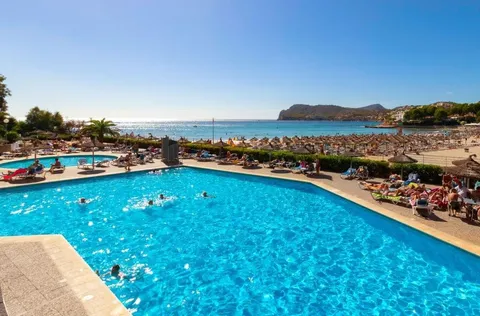
Not all beaches are the same. You'll find long sandy stretches, small coves (calas), turquoise waters, wild cliffs, peaceful family beaches, and snorkeling spots.
Many don't realize that the northwest of the island is home to the Serra de Tramuntana mountain range, a UNESCO World Heritage site. It spans over 90 km, featuring hiking trails, cycling routes, and stunning views from the highest peak, Puig Major (1,445 m). The island ranks among the top cycling destinations in Europe. Every spring, professional teams from around the world train here. You can also surf at some beaches or relax while golfing.
Romans, Arabs, and Aragonese once ruled the island, leaving behind medieval monasteries, stone towns, and old olive farms. From these, locals developed a cuisine rich in quality olive oil, fresh seafood, wine, almonds, and the famous oranges from Sóller.
This destination is loved by families, couples, seniors, and active travelers. You don't have to choose between the sea and the mountains, offering something different every day.
The Capital City Palma de Mallorca
Palma isn't a city you can just visit briefly. It invites you to slow down and wander through narrow streets, enjoy tapas, and soak in its extraordinary atmosphere. Around the historic center, you'll find many buildings with typical Mallorcan inner courtyards (patios). They often feature fountains, stone staircases, or subtropical plants and are open to the public.
Despite its size, most of the island's residents live here. The most significant landmark is the gothic cathedral La Seu. It's one of Europe's largest and stands by the sea. Antoni Gaudí worked on its renovations. It's worth visiting its interior, especially on a sunny day. Next to the cathedral is the former Arab fortress, now the Royal Palace of Almudaina. It serves the Spanish royal family during official visits. However, the most beautiful part of Palma is considered to be the old town full of history. Palma was under Moorish rule for several centuries, and their influence is evident in the street layout, inner courtyards, and some architectural elements. No plan is needed; just stroll and discover naturally.
Another highlight is the Mercat de l’Olivar market. It's not a tourist trap. Locals come here for fresh fish, seafood, cheeses, jamón, and other foods. Inside the market, small bars offer wine and fresh tapas. Palma is among the best gastronomic cities in the Balearics. In the evening, the center comes alive with the aroma of food, so besides tapas, try pa amb oli, ensaïmada, or seafood.
The capital also features the Paseo Marítimo promenade, running along the harbor filled with luxury yachts and restaurants under palm trees. Beyond the well-known tourist spots, Palma de Mallorca hides lesser-known places. Among them are the tranquil Arab baths Banys Àrabs – one of the few preserved Moorish monuments. Below the cathedral, you'll find not just a large lake but also the Parc de la Mar. In the evening, some of the most beautiful photos of La Seu are taken from there.
Palma is also an excellent starting point for exploring the rest of the island. From here, you can easily reach the Serra de Tramuntana, Sóller, and several beaches.

Serra de Tramuntana Mountain Range
One of the island's most beautiful areas covers its northwest coast. UNESCO recognized the Serra de Tramuntana not just for its mountains but also for its dramatic cliffs, winding roads, stone villages, olive groves, citrus orchards, terraced fields, historical monasteries, and Mediterranean views. The drive here is among the most scenic in Spain. Practically every few kilometers, you'll find miradors, small parking areas with numerous photographic spots. Among them are olive groves over 1,000 years old, still producing olive oil today.
The entire mountain range is also interwoven with stone terraces and walls without mortar. They helped capture water, cultivate slopes, and grow olives. However, the most sought-after activity here is hiking on the GR221 trail, also known as the Ruta de Pedra en Sec (Dry Stone Route). It crosses the entire mountain range.
Along the way, you'll also encounter the peaceful town of Valldemossa, where composer Frédéric Chopin lived with writer George Sand. Their stay is commemorated by the local monastery, as well as the stone streets adorned with colorful flowers. This place exudes tranquility, best enjoyed with the typical sweet pastry Coca de Patata.
Other places here have a similar character. Deià has also become home to several artists, including British writer Robert Graves. It attracts you with its tranquility, small hotels, and romantic atmosphere. Lastly, you'll find the popular town of Sóller. It's surrounded not only by mountains but also by fragrant orange and lemon trees. It has a bustling historical center, a square, a cathedral, cafes, and one of the biggest attractions – the Ferrocarril de Sóller train. The wooden carriages with original interiors have been running through Sóller since 1912, and the journey passes through tunnels, mountains, and citrus orchards. The journey ends right by the sea in Port de Sóller.
Tip: Discover more interesting places during your vacation in Mallorca.
You can visit here in spring, summer, or autumn, when the temperatures are more pleasant. The Serra de Tramuntana reveals a completely different side of the island. Just leave the coast, and the island transforms into a mountain world full of stone villages and olive groves. Some of the most stunning views on the island aren't found on the beach but high above the sea. The journey itself will be one of the most memorable experiences.

Other Views and Caves
Places with the Most Beautiful Views
In the north of the island lies Cap de Formentor, one of its most photographed spots. A panoramic road full of twists and viewpoints leads to the iconic lighthouse, from which you can see the high cliffs and the endless Mediterranean Sea. It's worth stopping at the Mirador Es Colomer viewpoint, where you can see the rocky coast in all its beauty.
Equally impressive is Sa Calobra, a small cove hidden among high cliffs. The journey to it is among the most beautiful on the island. Nearby is also the natural phenomenon Torrent de Pareis – a massive canyon with rock walls over 200 meters high.
The Underground World of Mallorca
The island's natural treasures also include the Cuevas del Drach and Cuevas dels Hams, which are among the most famous accessible caves in Europe. They formed over millions of years and today attract visitors with their rich stalactite decorations, underground lakes, and unique atmosphere.
The biggest attraction of the Dragon Caves is the Martel Lake, one of the largest underground lakes in Europe. The tour usually includes a short classical music concert, during which musicians play directly from boats on the lake. The nearby Cuevas dels Hams impress with their unusually shaped stalactites resembling hooks, impressive lighting, and a multimedia tour.

Conclusion
Mallorca is a destination that offers much more than just trendy resorts on endless beaches. In a compact area, it combines historical towns, mountain villages, panoramic views, underground caves, and unique gastronomy.
J