Banská Štiavnica, the Pearl of Central Europe: A Symphony of Time in Slovakia
Have you heard of the urban gem listed as a UNESCO World Heritage Site? Explore the mysteries and beauty of Banská Štiavnica, a city perfect for history, nature, panoramic views, culture, and art enthusiasts.
 J
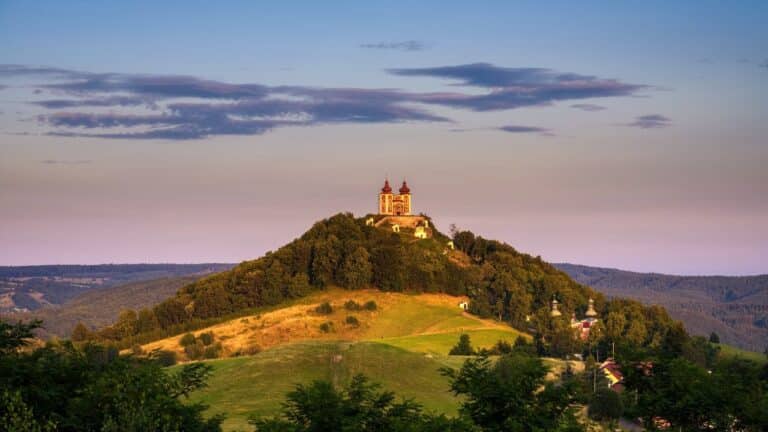
Banská Štiavnica, located in the heart of Slovakia and embraced by the Small Carpathians, stands as one of the most impressive places in the region. It showcases a rich mining history and legendary past while keeping pace with modern times. This urban gem is a UNESCO World Heritage Site. Discover the mysteries and beauty of Banská Štiavnica, a city perfect for those who love history, nature, panoramic views, culture, and art.
>>> Planning a weekend getaway outside Slovakia? Discover what to see in Montenegro.
The Golden and Silver Heart of Europe
Banská Štiavnica's story begins in deep, dark shafts. Beneath the earth, wealth was hidden, drawing miners, traders, and adventurers from around the globe. Gold and silver from the surrounding mountains shaped the city's fate and influenced medieval Europe's economic and social development. During its mining heyday, Banská Štiavnica became a technological and scientific hub, pioneering techniques that revolutionized the mining industry.
Architectural Courage Interwoven with Beauty
Walking through Banská Štiavnica feels like strolling through an open-air museum. Each building and square has its own soul and story. The city features Gothic temples, Renaissance buildings, and Baroque churches. The architecture reflects the rich history and aesthetic ideals of different eras.
A City for Everyone
Banská Štiavnica appeals to all. Historians, artists, nature lovers, and those seeking inspiration will find something here. The city offers streets full of stories where one can wander and travel back in time, hidden corners rich with beauty, and a history that reveals a deep and rich heritage.

TOP 10 Attractions of Banská Štiavnica
1. Old Castle
This massive medieval structure, one of the oldest in Banská Štiavnica, originally served as a church. Its strategic location later turned it into a fortress during Turkish invasions. The Old Castle, with Baroque elements, successfully protected the historic town, as Banská Štiavnica was never conquered.
Today, the Old Castle hosts a museum with exhibitions on the city's history and mining.
2. New Castle
The New Castle is not a castle. Built in the 16th century as a watchtower against the Turks, its Renaissance silhouette is now a city symbol.
This fortress with four round towers houses historical exhibitions and offers a stunning view of the city and its surroundings.
3. Banská Štiavnica Ponds
A unique feature of Banská Štiavnica is the ponds, artificially created water reservoirs scattered throughout the landscape. They were built in the 18th century due to mining activities. Once, they powered the area's developing industry.
Today, these ponds are an idyllic spot for rest and relaxation. They serve as beautiful recreational areas and are a testament to human ingenuity and adaptability. Of the original 60 reservoirs, only 24 remain. The most famous and largest is Počúvadlianske Lake, a popular resort for cabin owners, hikers, children, and a venue for cultural events.
4. Mint and Kammerhof
In the mint, Slovak thalers were once minted. Kammerhof was the former seat of the mining and minting chamber, both places highlighting the rich mining history of the city.
Kammerhof is the most valuable heritage site in Banská Štiavnica's historic center. It houses a mining museum with the most extensive exhibition detailing the mineral extraction process.
5. Calvary
One of Europe's most beautiful calvaries with chapels and temples, this site is both a spiritual place and an architectural gem, offering breathtaking city views. It is a national cultural monument and part of the UNESCO World Heritage Site.
Calvary is a religious site on Scharffenberg Hill (Sharp Hill). It consists of 22 sacred buildings, including seventeen chapels depicting scenes from Jesus's crucifixion and the seven sorrows of the Virgin Mary, three churches, the “Ecce homo” station, and the Holy Sepulchre. Created in the 18th century, it served as a pilgrimage site.
The Baroque-style Calvary is one of Europe's most impressive Baroque calvaries and one of the most significant examples of Baroque sacred architecture in Slovakia.

6. Botanical Garden and Mining Academy
The Botanical Garden, part of Matej Bel University, is one of Slovakia's oldest. It shelters a variety of rare plant species, offering a paradise for those seeking relaxation in nature.
The Mining Academy is the cradle of science and education. It was the first of its kind globally, attracting thinkers and scientists worldwide. Founded in the 18th century by Maria Theresa, the institution's legacy continues to inspire education and innovation in the city.
7. Štiavnické Bane and the Mining Museum in Nature
The village of Štiavnické Bane, part of the Banská Štiavnica mining area, is home to several historical mining works. It offers a unique insight into the region's mining history.
A standout attraction is the mining museum. Here, visitors can experience life as a miner and travel back to the era of underground silver mining. This outdoor museum is Slovakia's oldest and largest mining museum, featuring a surface exhibition with unique machines and an underground section, including the Bartolomej tunnel.
8. St. Catherine's Church
The late Gothic Roman Catholic church captivates with its stunning architecture. Built in the 15th century and consecrated in 1500, it began hosting Slovak sermons in the 17th century. Visitors can admire the rare painting of the Last Judgment if they time their visit right.
9. Marína's House
A draw for romantics, Marína's birthplace, the beloved writer Andrej Sládkovič, is proof of an everlasting, yet unfulfilled love. The heart of the building is the Love Bank, the only love vault in the world, which protects thousands of stories. It comprises verses from the poem Marína, with each verse containing as many love compartments as there are letters, characters, and spaces. Anyone can hide their message there.
Another highlight is the Love Meter, which measures couples' love and expresses it through verses from the poem Marína.
The Sládkovič Library is also noteworthy. It holds the original manuscripts of the poem Marína, over 100 years old, yet still touching and full of yearning love.
In March 2023, however, Marína's house was destroyed by fire. Its image was miraculously untouched, but the rest turned to ashes. Thus, this place is closed to the public until 2026.
10. The Holy Trinity Sculpture
The historic square's dominant feature is the majestic column with the Holy Trinity sculpture. Built in the 18th century in gratitude for the retreat of the plague epidemic, the iconic Baroque column remains a popular meeting place. It hosts various cultural events and the traditional fair that draws visitors to Banská Štiavnica.
Conclusion
In Banská Štiavnica, every stone, building, corner, and watercourse tells a story of the past, present, and future. The city remains authentic, offering a place where history becomes the present and where every visitor can find a piece of themselves in its ancient streets and green hills. Banská Štiavnica is a symphony of time, celebrating human resilience, beauty, and the endless ability to renew.
J